
What is spontaneity?
Improvisation is any performance where there has been no preplanning: where there is no script or any detailed outline for the show. However, impro is more than simply the absence of these things. It also represents a process and a philosophy of communication, creativity and connection. It is these skills and ideas which allow performers to work with each other, in the moment, to create amazing and wonderful scenes.
While many people can get nervous when learning impro (and it can take you out of your comfort zone) it is important to remember two things. Firstly, don’t try your best. Putting pressure on yourself to succeed often makes life more difficult and success more elusive. So stop stressing! And secondly, its ok to get things wrong.
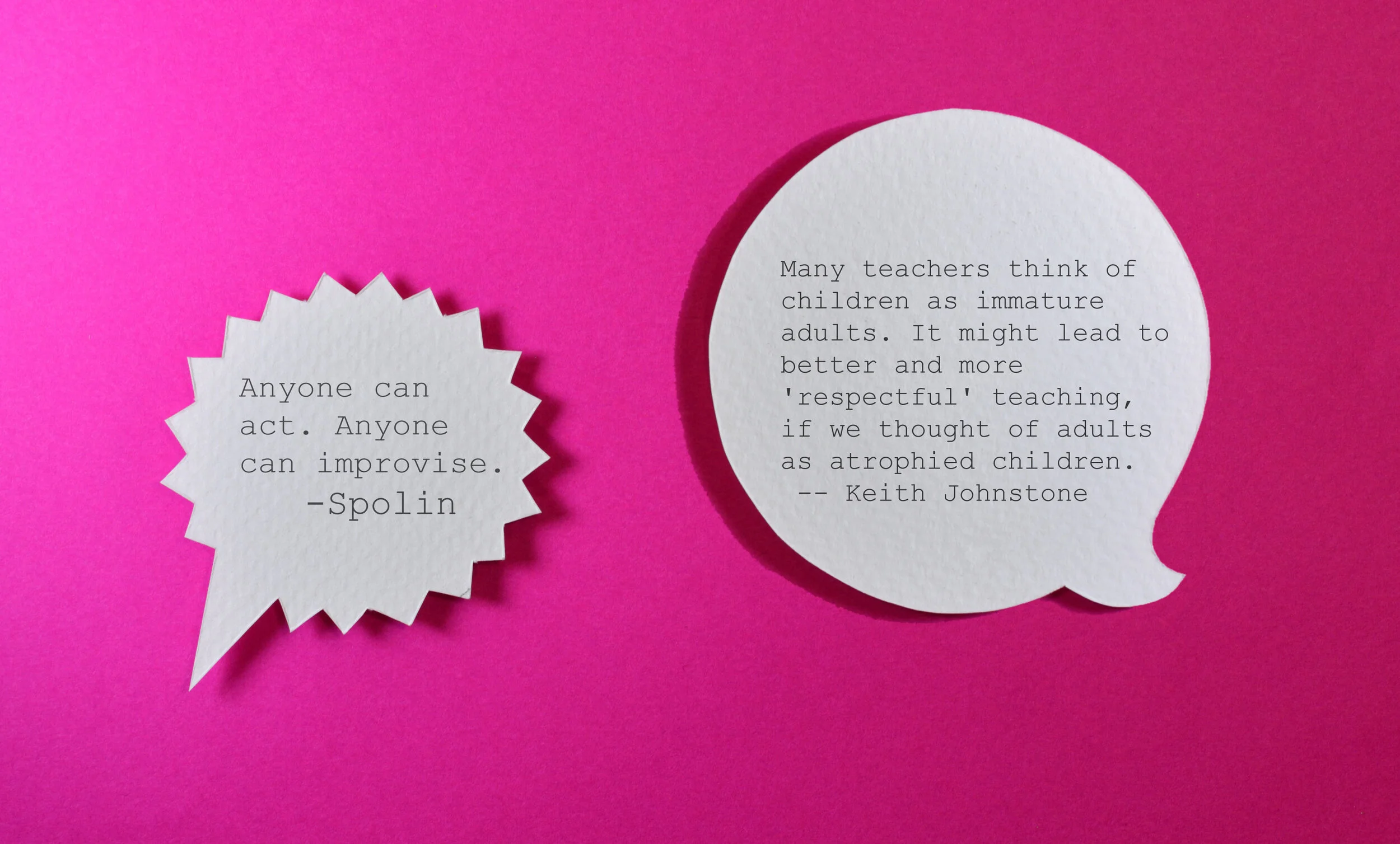
What is spontaneity?
Most impro teachers believe that people learn to be unimaginative. That our fear of judgement, our fear of being seen as crazy, or obscene, or boring, causes us to put up defensive shields to the world. We seek to reassure other people that we are normal and safe. This means performers often censor ideas for fear of what other people might think. So how do you change this?
Well, that is what impro is all about, and there are a number of techniques which can be used. Learning to embrace failure as a natural part of the creative process is an important step. Learning to not judge other people's ideas, or your own, is another. And finally, you can learn to distract the rational part of your brain and let more automatic, intuitive processes take over.
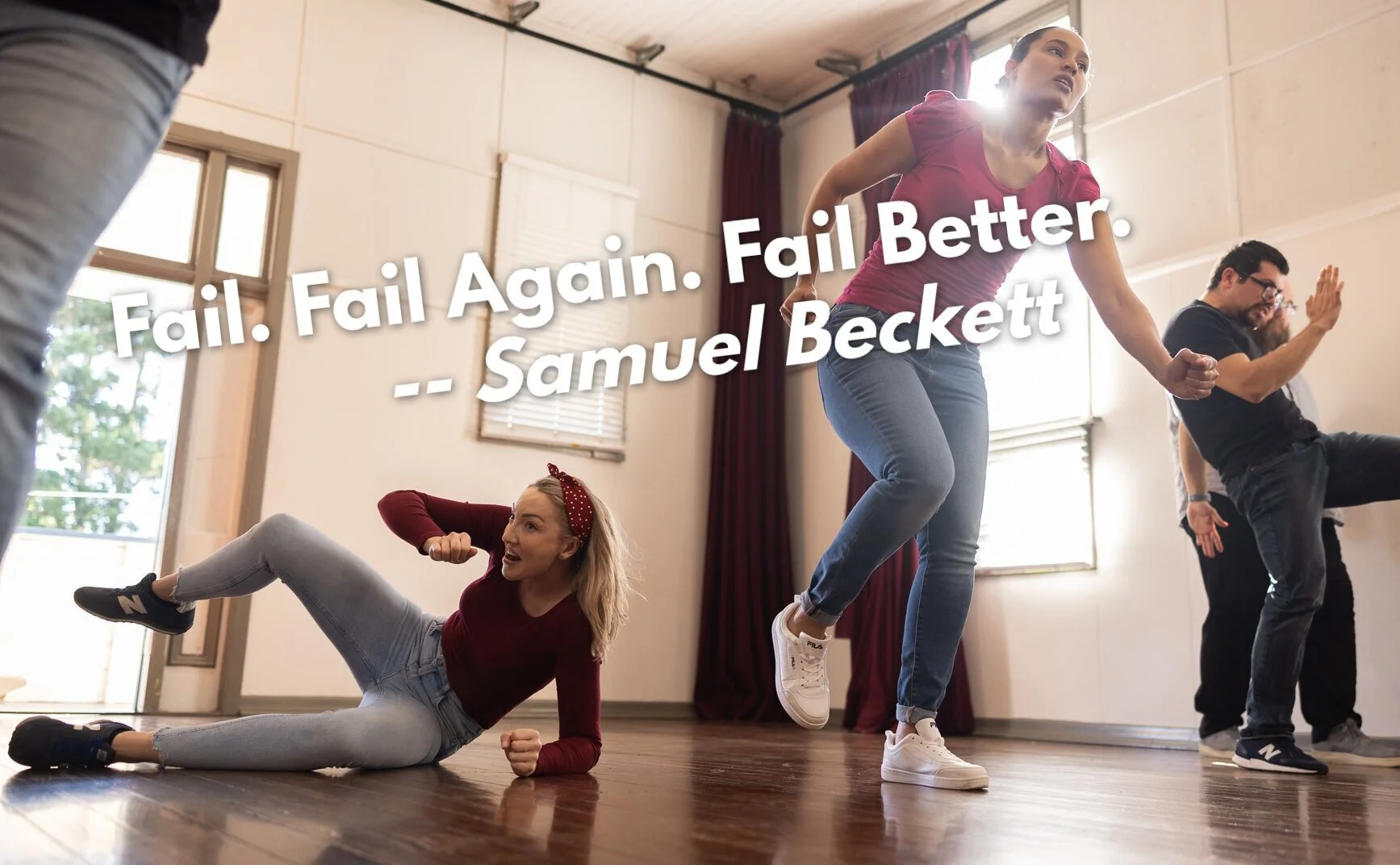
Do not be afraid of failure.
Improvisers like to say that they love to fail. This doesn't mean that a good improviser doesn't try to produce good work, or that they don't care if things go wrong. What this means is that a good improviser accepts that failure is a part of any creative endeavour because any creative endeavour is by its very nature risky. If you fear failure then you will start making safe choices - and safe choices are a sure fire way to kill off creativity.
It also valuable to remember that if you fail with confidence, then the audience will often forgive you for whatever went wrong. On the other hand, if you look awkward or embarrassed, then the audience is also going to feel awkward and embarrassed. .
Making something happen on stage
Our natural or default setting in life is often quite negative. This may be for good reason and is an important survival technique (it stops us getting into the creepy stranger's car) but on stage we don't want to see characters make safe choices. We want to see them take risks, make mistakes, and do things we would never do in real life.
So the first step to making something happen on stage, is to let it happen. This means learning not to kill off ideas when they occur be it your idea or someone else's.
“In life, most of us are highly skilled at suppressing action. All the improvisational teacher has to do is reverse this skill and he creates very ‘gifted’ improvisers. Bad improvisers block action, often with a high degree of skill. Good improvisers develop action.”
Activity
Presents
Why: This is a great game to get people being creative and playful. You can also nudge them into doing scenework and spacework.
Get the group to get into pairs. They are to take turns giving each other a gift. There are two rules – the gift giver doesn’t say what the gift is – the person receiving the gift names the gift. Secondly, the receiver must love the gift.
Let them exchange gifts a few times and then have a discussion. Get them to name the gifts they received and ask questions about how they felt giving the gift to the other person. Try to identify that it felt good to have their offer of a gift received with positivity.
Run a few times with different partners.
Get them to explore giving different shape and sized gifts
Get them to use or play with the gift and to do so TOGETHER. Look for partners who destroy or throw away or otherwise do not play with the gift.